Labels

tasting notes (39) brewing (35) beer review (26) yeast (16) hops (12) breweries (10) Beer Geek Night (9) malt (6) beer names (5) brewing gear (4) festival (2) MtG (1) games (1) macro (1)
Posts tonen met het label malt. Alle posts tonen

maandag 2 december 2013

Black & Heady

Because we were curious as to how the Zwarte Madam was coming along, and because any excuse is good enough to share a beer or two, BeerBert and Yours Truly sat down at the table the other night to do some science.

Curiosity cannot be trusted around cats.

Because I had just acquired a can of Heady Topper (thanks, Denno!), we dug into that first. It needs to be drunk fresh after all, so it made no sense to keep it around. 
Drink from the can, it says, but since we're proper scientists, we did in fact use a glass. 

Blasphemy!
Pic not mine, sorry.
Pale and cloudy, with a minimal head, this is a splendid IPA, chock-full of hops, with some extra hops ladled on top. The beer checks all the proper boxes, and sort of sets the rules regarding IPAs. 
From the nose, across the tongue, bouncing across the hard and soft palate, all the way down into the throat, the Heady Topper is smooth and fresh hops all the way. You get just about the whole gammut of hoppy impressions, from grassy to piney, from fruity to flowery. Juicy almost. Almost as if it's not actually beer, but a beer-flavoured hops tea. Delicious. Although extremely hopped, it never becomes extreme. Except perhaps extremely drinkable, even at 8% abv.

But science beckoned, and the Zwarte Madam needed tasting too.

Pic by Dennoman, who wasn't even there.
FLTR: Zwarte Madam basic, caraway and water cress seed.
The basic version, now with about six weeks of bottle conditioning under the cap, still pours a sluggish black. Low carbonation and a slackish tan head. Nose is chocolate and just a faint whiff off greenish hops. With a thick pour like that, the nose is a bit underwhelming, actually, and could use a bit more chutzpah.

1 image > 1000 words in this case.
In the mouth, the Zwarte Madam doesn't surprise, and remains somewhat modest, with chocolatey, smooth dark malts tones. Onset is smooth, if a bit light, then peters out in the middle part, but luckily returns with a malty sweet aftertaste. Slightly too much body, or too narrow a taste to stand up against it.

In all, the basic version is okay, although unfinished. I need to adjust the malt bill to achieve a broader, more rewarding flavour to warrant the relatively heavy body. Perhaps a smidge more hops too. Carbonation should be increased as well. BeerBert seemed to be agreement: this beer is quite alright but in its current incarnation perhaps not interesting enough to have another one. Denno detected hints of oats in an independent tasting, and I'm tempted to add some toasted oats in future incarnations to spruce up the body.

But hark! I opened up two dry-spiced versions to compare and -gasp- blend! 

The caraway version is already decidedly overdosed, with the caraway so firmly in the picture that the delicate chocolate notes of the base beer can hardly stand up against it. I happen to like the particular flavour imparted by the caraway, but BeerBert was quite put off by it. Granted: too much is too much, especially since the base beer isn't really robust enough to withstand more than a pinch. A blend of perhaps 1/6 caraway and 5/6 base made a better impression on me, although Bert's palate got thoroughly wasted from the very first sip of pure caraway. In future incarnations, I may consider boiling the caraway instead of dry-spicing, to better incorporate the flavour into the beer. Mixed messages here, as some seem to like it (quite a lot actually), while some find it unpleasantly overspiced.

The watercress-seed version...well, what can I say other than that it was a bit of a nut-job? The beer really pongs. An overwhelming scent of watercress, poppy seeds and something vegetable which really kicks the shit out of the poor base beer. Even minimally blended (a tiny splash in the aforementioned 1/6 caraway blend) still violently annexed the beer. I can see how the flavour imparted by the cress seeds itself could be an asset to dark beers like this, but I really need to go Uncle Scrooge on it, lest it become an undrinkable mess. Also: for some odd reason, the cress seed seems to amplify the beer's sweetness, turning into a syrupy mess.

Conclusion: Zwarte Madam is a good idea, but needs quite a bit more work. The base beer as it is will serve as a good basis for a more rounded incarnation, possibly including a drastically lowered dose of caraway, and mayby some oats. On the cress seed, I'll refrain from make a decision just yet, but it's not a plausible ingredient at all.

BeerBert always brings stouts when he comes to visit and I'm not one to complain. Especially not if by "stout" you mean this:

Which I do.
Pic again not mine.

Murder & Larceny, and another ampersand pun from the Molen guys. "Screaming bloody murder" is the anglophonic counterpart, and yes, the beer is good enough to apply the proverb. 
All the usual Molen-boxes are ticked: a big, fat body, with a rich tan head. Sublime nose, with hints of smoke, vanilla and bourbon. There's a hint of playful, saturnine mischief lurking in the darkness, which I put down to the rye malts. While it's a big nose, it's not a big fat booze bomb at all: you can sniff the glass all evening and never get bored, nor overwhelmed, but ultimately, you're tempted to take a sip.

In the mouth, this beer simply oozes flavour. There's a nicely balanced smokiness in the undercurrent, beyond noticable but well within limits. Rye and oat malts complement this smokiness splendidly, and the bourbon sits just at the detetection threshold. It's truly amazing how well each individual ingredient of this beer pairs off with the others: the smoked malt elevates the roast and prevents it from becoming ash-like. The chocolate is tempered by the roasted, oat and rye malts, which prevent it from turning the beer into a more familiar (and I daresay less interesting in this case) chocolate-and-coffee stout. The bourbon barrel ageing adds a slightly boozy sweetness, but is quite delicate when compared to recent-day bourbon stouts.
Although they're completely unrelated style-wise, I'd like to take the opportunity to refer to Emelisse's Smoked Rye IPA. Both beers have an aluring undercurrent and an intriguingly delicate smokiness which make them an utter delight to drink.
Truly a marvellous beer, exceptionally well balanced and rewarding. Thanks, BeerBert!

Drunk separately the next day, each from within the confines of our own comfy chairs, we tasted the Emelisse Black & Tan. While I had half an idea what to expect, I daresay I was totally unprepared for this one. 

Okay I forgot to take pics alright?
Stop rubbing it in already!

Black-and-tan (sometimes called Half-and-Half) , for those of you interested in beer history, is something like a beer cocktail. It's a blend of two beer styles, which the landlord would blend on site according to the customer's taste. Typically, a pale ale and a dark beer would be combined in one glass, sometimes presented in two individual layers.

Beer for the pathologically indecisive.
In this case, the blend is between Emelisse's own TIPA (a splendid triple IPA) and their IRS (a solid imperial stout, well suited for all kinds of shenanigans). What's not on the label is the fact that it's also been aged on Islay whisky barrels. 

Peat lovers, start your drooling.

The beer pours a very dark brown, almost black, with cola touches near the edges and a light tan head. Nose is medicinal with peat and smoke at the forefront. While the intensity is quite moderate, the peat amplifies the experience, making this come across as a bit of a wrecking ball.

In the mouth, the first impression is a full gale blast of peat and smoke. Seriously, if you can't stand smoked malt, and if you're not already a dyed-in-the-wool fan of Islay's signature up-front peatiness, then you might as well turn back now. Very little of the constituent beers remains upright under the onslaught of Islay barrel goodness, and you're left with something which most resembles a firm-bodied stout. Not exactly an imperial, but by no means a dry stout either. The DIPA is normally quite (*) hoppy and chewy, and although the chewiness remains in the blend, the hops are entirely washed out by the peat.

*) by quite I mean very but not ridiculously. Adjectives become somewhat meaningless when discussing the hoppiness of double-and-above IPAs

That initial blast of peat mellows down slightly, after which the beer becomes intesely phenolic, in an absolutely unique way. Yes, there is a hint of medicine in there, which is precisely what makes Islay-fans seek out these iodine-and-sea-brine flavours. But the medicinality is really just an undercurrent: the impression which really carries the beer all the way home is one which is decidedly unique, and which took me until the last sip ere I could finally put the finger on it. This beer, ladies and gentlemen, tastes like vetiver smells.

Not that many people know what vetiver  smells like but still.
Truly a unique beer, this Black & Tan, but subject to polarisation. Some people will love it, but most people I know will consider it to be at least too much.
I am one of the latter: it's a beautiful beast of a beer, and it coated my tongue for the rest of the evening. Marvelous job again from Kees&co!

Greetz

Jo


dinsdag 21 mei 2013

Brewday!

HoppySlosh brews again!

What with spring being somewhat delayed, I had ample time to contemplate my next brewing endeavour. Looking foward to mowing the lawn and doing other potentially dehydrating chores around the house during the summer, I'm brewing a light, hoppy wheat beer this time; an American style hefe-weizen (or a Germanic Murkan wheat, if you will).

First things first: I need to learn how to control my brewing volumes so I'm applying science in the most advanced way possible to gauge the volumes in my kettle:

The Graded Spoon

Yes, that's a (rather oversized) plastic spoon, graded by yours truly to indicate how much liquid is in my kettle. Sometimes, all you need to improve the quality of life is a permanent marker. And an oversized spoon.

Onward onward as the day wanes: mashing was a breeze. I was prepared for all kinds of disaster (*) after reading that wheat tends to clog up the filter bed, but my grain behaved perfectly, and I got a good 22 liters of turbid wort out of the tun.

Steep steep.
*) speaking of disaster, the most important rule in brewing can be neatly summed up as this: Always check your valves. Nothing spoils the mood quite like having to start mopping when you're not even 5 minutes into the mash.

I applied a new technique (well, new for me at least) called first wort hopping.

Not hard to guess what that means.

I've been told the early addition will smoothe out the bitterness from the early hops, so here goes nothing.

Sparging. Note the state of alertness of the nearby mop.


Sparging went well, although I did forget to properly mash out (again). Forgot to take a pic of the pre-boil wort, but one thing I like about wheat is that it naturally clouds the wort, which means I could stop worrying about a super-clean sparge for a change.
No pic of the boil either, so you'll need to take my word for it: I added liberal doses of Centennial, Amarillo and Citra.

Post-boil tampering with the counterflow cooler.

My fifth attempt at brewing and I finally figured out how to properly cool: let gravity do the work. As you can see in the pic, I pour my boiled (and still piping hot) wort in my mash tun again, which will now serve as a filter tun. What's not in the pic is how this time I placed the tun on a stool on top of the counter, raising it high enough to no longer be a pain during cooling. Higher altitude means more hydraulic pressure chasing my wort through the cooler, and less chance of flowback or halted cooling. 
Should have thought of that four sessions ago, but at least I'm improving.

After cooling, only one thing was missing. Well, two really.

Some yeast, and a lovely assistant to pitch it.

I'm using a bit of a character yeast this time: the German Hefe Weizen from White Labs (WLP300 in case you're interested) will impart spicy notes to the beer, which I hope will complement the hoppy aromas.

Fitted the airlock, forestalled any domestic disputes by cleaning up the kitchen, and a good six hours later, the yeast was going glugluglug like clockwork. Next morning, a good 5 inch of thick yeasty froth confirmed all was well with Brew#5. I'll give it about a week in primary (depending on airlock activity and density measurements), after which I'll rack it to secondary, with a generously added amout of Citra hops. From the whiffs I got off the airlock so far, this may prove to be quite drinkable. 

More news as the brew progresses!

Until then,

Greetz

Jo

donderdag 18 april 2013

Neuen Horizonten verdammt!

Way out of my comfort zone, on the murk side of Holland, and ever so discreetly bordering on Belgium proper, lies Germany.

Map not entirely up to date.
Remember what I said about Belgians and their low esteem of foreign beer? Well, all of that applies particularly to Germany, whom whe've still not forgiven for that string of military fisticuffs sometime ago.

German beer, to most Belgians, is perhaps even worse than Dutch beer for a single reason. In our opinion (and I must stress this is just me voicing the average Belgian's culturally dictated appraisal of foreign beer, and certainly not my very personal own) the Dutch  are merely incapable of brewing anything other than nauseating lager. Just order any commercial Dutch pilsner and you'll come to understand us backward Belgians a bit better
The Germans are worse because they choose to brew bland beers. Yes, the infamous reinheitsgebot puts certain (stringent) limitations on German breweries, and to the historically more liberal Belgian brewer, this equals bland, uninspired, dull beer.

But hark!

My buddy Frank (no, not that Frank, the other Frank again, the one...oh whatever, just Frank will do for now) made a generous contribution to my beer cellar recently, and among the acquired stash was this charming fellow:

Naturally opaque yeasty white-beer , in proper English.
My first real weissbier (I'm deliberately not counting any Belgian white beers or blanchekes, nor any of the more ubiquitous German weissbiers you might encounter the world over), this came highly recommended by just about anyone interested in beer, as it's something of a standard for the style.

Hefeweizen (weizen and weiss would appear to be synonymous) is a wheat beer (meaning it's mostly made from malted wheat, instead of malted barley), with a pronounced estery flavour coming from a particular strain of top-fermenting yeast.

The Paulaner pours spectacularly, with the densest, pillowiest head I've ever had the pleasure to encounter. True to style, the beer isn't clear but shows a typical wheat haze, which makes the warm orange colour really stand out. Beautiful pour, this one, and my Belgian roots are already withering.

That nose. Oh Saint Arnoldus blessed be, that nose is out of this world.
Coming back to Belgium, ever since beer got stuck in the elevator of trendy beverages, "Belgian" is now officially a flavour, rather than a denominator of nationality or origin.. A tripel can be whatever you want, but if you say it has a "Belgian" taste to it, even beer geeks in Singapore will know what you mean(*).
Why am I bordercrossing back to my home turf here? Because if Paulaner's nose is at all representative of the hefeweizen style, then "German" should be a flavour too.

*) especially of you throw in other buzz words like funk and barnyard.

Where Belgian yeasty beers tend to focus on fruits (banana, citrus, apple, pear, what have you), this hefeweizen displays a dazzling aray of spices, ranging from clove to nutmeg, and probably some others in between. Words fall short, but this beer smells amazing.
In the mouth, you get that same spicy, mulled impression. Combined with the naturaly crispy sourness which all wheat bears display, what you have here is an immensely drinkable, yet surprisingly complex beer. A beer which instantly makes me regret any diminutive comments I may have ever made regarding Prussian beer.

Frank's gift did not end there. Paulaner Hefeweizen is a benchmark in its own right, but so is this one:

Schneider Weisse Tap 5: Meine Hopfenweisse

Schneider has a range of these "weizens", numbered and somewhat quaintly named. To turn language barriers into true Iron Curtain-style obstacles, this Hopfenweisse is actually a weisse doppelbock.

Yeah. Makes more sense in the glass.

Not just any doppelbock, but a hoppy one to boot. In a way, this makes the Schneider5 something between a weizen and an IPA.

Pour is remarkbly clear (wait for it): even though it's a lager (which no, is not synonymous with cheap ass pilsner you heathen), it's still a wheat-based beer, and hence I'd expected it to be hazy. But no, the first half (waaaaaaait for iiiiitttt) presented as a dark, lightly coppery lager, with a lanky head.

In the nose, there's a dazzling burst of hops going on: herbal, piney and resiny, undulating into flowery and back again. Not sure which hops are in this beer, but the nose made me think of some of  the UK ales I've sampled a year ago in London, with an almost soapy character to it. While it's not a hop bomb like so many (often US or NZ) hoppy IPAs, it's definitely a hoppy beer, make no mistake. But like UK hoppy ales, the hops take on a different identity from what we're used to over here. And while the result is a bit alienating, it is (if nothing else) intriguing.
Flavour-wise, weirdness abounds. The strong hop profile, combined with the fruitness of the wheat and the relatively high alcohol content (8.9% ABV) turn this in a perfumed beer, delicate but wafting at the same time. It's nothing like a modern era IPA, despite having a distinctly hoppy profile, and it's nothing like a weizen either, in that the wheat plays second (if not third) fiddle to the hops and (I'm on a limb here) the yeast.
Besides soapy hops (and this sounds less appealing than it really was), there's the fruity, almost lactic tartness of the wheat, and a gammut of spicy yeast: cloves again, mace and a hint of lemon peel, again teased by that ambiguous flowery note.

While very, very tasty, it's also a bit tiresome, as if it were a wheat beer with ADHD. Oh and that remarkably clear pour?

Guess what came with the second half?

Now I'm not fussy about the clairy of my beer. A live beer, a proper living beer, is allowed (nay, expected!) to be a bit hazy. But this is perhaps a bit much. Zoom in on that pic and you'll find bits of debris floating about, happily contributing to a lot of things, but not to aesthetics. The contrast with the clean, clear lager pour of the first half could not be greater if the beer had suddenly lit up a bright blue neon and started humming the theme to Allo Allo.
In other yeasty beers, adding the sediment will emphasise the yeast characteristics, but in this already very yeasty weizen, it added nothing but murk, so I advise pouring it carefully, in a large enough glass, and simply leaving the sediment in the bottle.

So.

Where, except waaaaaay out of my comfort zone, does that leave me?

I'm intrigued. I'd never imagined wheat beers to be this complex, and the fact that they're both German makes me all  boingboing with anticipation: a whole "new" country to explore. So many styles, now famous thanks to the booming craft- and home brew scene, which I know nothing about: alt, weizen, bock, what have you...

These were two fine specimens in their own right, and excellent ambassadors to German brewing. Just by themselves, they've established that there's more to German beer than gallon-sized jugs of watery Oktoberfestbier, and have made of me a man with a mission: to learn more about Germany and its beers and, if at all possible, spread the word across the border, that Prussia is still a force to be reckoned with.


I'll make sure not to mention Ze Var.
Until then,

Greetz

Jo

vrijdag 12 april 2013

HoppySlosh steps out

Last weekend, I hooked up with my buddy Frank (no not that Frank, another one. I know a Frank or two).

Yet another two franks.

This particular Frank (much like the other Frank) happens to like beer so I brought a couple of bottles to sample. Not because we like drinking cold beer, of course. But for science.

And fully clothed, I hasten to add.
First up was my own unpronouncable Brew#4: (zn+1=(|Re(zn)|+i|Im(zn)|)2+c, z0=0, with a trace of Mandelbrot). I'm really pleased with this one, which has delicate smoke on the nose, a bit of meaty chew and a fair bit of booze. Quite pleasantly balanced and although it's on the sweet side for me personally, I'm chuffed to bits about this one. Frank, being a tough customer to please, would have liked to find something less sticky at the end, and I agree. More on Brew#4 and its future offspring when I get to brew them.

We paired this with a fairly generic amber beer (Cad'Rousse) thereby supporting the less fortunate of this world whilst drinking beer. Sometimes charity really is a easy as that. 
Cad'Rousse (brewed by Grain d'Orge, not my favourite brewery by a long shot) is decidedly easy to drink, which is both its greatest strength and weakness. It's fairly nondescript, never offensive, but never leaving much of an impression either. At 7.5%ABV, this one is deceptively easy to drink (and hence to get just a wee bit sloshed on), altough I'd much prefer something a bit more identity to it. Paired with Brew#4, it was nice to see what I'd got right about amber beers, and what was missing.

Special treat for Frank was a beer he'd been talking about incessantly ever since we started having late-night forrays in zythology:


The EKU of Ye Dayes of Olde
I remember EKU from way back when I wasn't even drinking beer, when it was dubbed "the strongest beer in the world" (even though Bush/Scaldis was already around for a long time). At 11%ABV, it's nothing to scoff at, but my skeptical side reared up when I read the label: Gebraut nach dem Deutschen Reinheitsgebot. For some reason (and I'm blaming the bad reputation of German beers in Belgium), a reinheitsbier at 11%ABV didn't exactly fill me with optimism.
However, I'm glad to say that EKU was quite okay. There's an obvious kinship with Bush (and even some Bières de Garde), caused by a monocline focus on malty sweetness. Very little is happening in this beer besides sticky sweet malt and throat-tickling booze. While this sounds worse than the beer actually tastes, this really is a beer for which you to find the right occasion.

We concluded the evening with a solidly pleasant bottle of 2012 Cuvée van de Keizer:

The blue one, obviously.
Another sweet beer, but, in true Anker style, massively spiced, with bits of orange peel, liquorice and just a wee whiff of cardamon coming through. Not sure but I thought I detected cinnamon too. This is one of those beers you can easily cellar for a couple of years, in the knowledge that it will only get better while you're twiddling your thumbs in anticipation. But even fresh, this one's a winner.

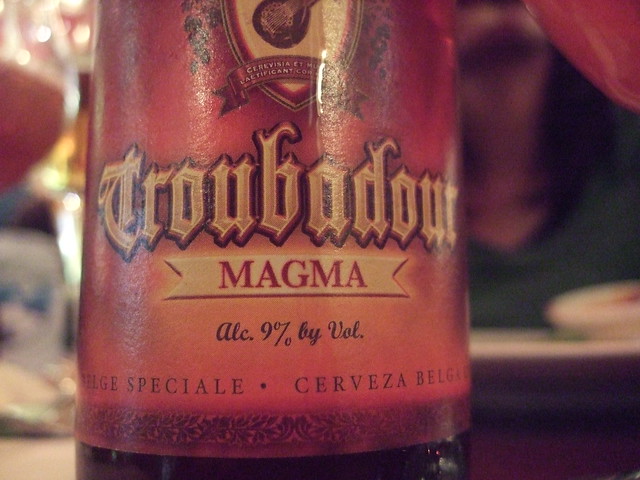
The next evening, we swam hoppier waters and compared the Troubadour Magma 2012 with its basic version.
Nothing says "big beer" like calling it Magma

The basic Magma is somewhat unique in Belgium, where IPAs (let alone Double, Triple or Multiple IPAs) are few and far between. The Musketeers don't label this one as (even a singular) IPA, but it's clear from the get-go that this is what it is. Beautiful orange hazy pour, fruitpunch nose and a solid, luscious, caramelly malt backbone. With a beer like this, you can't go wrong. 

Well, turns out you can: Frank wasn't too happy but face it, Frank's not too hoppy to begin with.

While the Magma is a great beer, I have had little success trying to sell it to less devout beer drinkers than myself, who tend to find the hop aromas and bitterness somewhat overpowering. Being a Hop Head, I think the balance is just right, leaning towards the slightly too sweet, but that's inherent to the style.
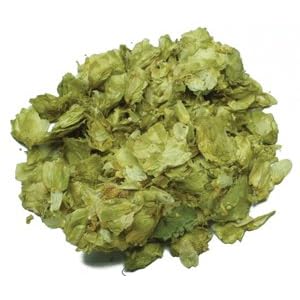
The 2012 version replaces the Simcoe dryhop for this year's(*) new black: Sorachi Ace.


Because a picture of just any old hop will do just fine, right?
Sorachi Ace isn't my favourite hop, being rather weird in flavour and aroma. In this beer, the fruity bitterness of the basic Magma is replaced by a woody, bubblegummy, slightly melony flavour. As expected, Sorachi Ace hints at barrel aging, without actual barrels having been involved. It's definitely a flavour you need to get into; at first it's mildly off-putting, but it does grow on you, and when sampled side-by-side with the basic Simcoe version, it's interesting as well as tasty.

*) you'll note that while Sorachi Ace is 2013's new black, the Magma we're talking about here is the 2012 version. Looks like either the Musketeers are way ahead of the trending market, or they create trends themselves by not giving a damn about them.

For fun (I mean for science!) we ended the session with that gnome of some renown:

Yeah. I get it now. Double tripel equals sextuple. Or how a label can be too clever sometimes.

Amazing how light and refreshing and balanced the Chouffe Houblon is after the more typical sweet undercurrent of both Magmas. Amazing also how much more subtle and refined the little gnome's hop presence is: the Tomahawk/Saaz/Amarillo combo is bold, but delicate, much more so than either one of the Magmas' more bellicose hoppiness. Because the Chouffe is drier, the hops present themselves less as counterweight to the sweetness of the malt, which is where the Magmas get most of their identity. Ironically, at 59 IBU, the Chouffe Houblon is more bitter than the Magmas (the basic version sit at an already impressive 50), but is more aromatic, with less perceived bitterness, than the Magmas.

Very interesting tasting session, which drove home the point what a superbly crafted beer the Chouffe Houblon is. Also, it made me realise once more that what constitutes a tasty beer is different for anyone, and that what makes one person go all "wow" can make the other go "meh" of even "yuck".

After all that hard work, all invested parties slept soundly, if perhaps somewhat too little, and woke feeling much more enlightened (admittedly, enlightenment was struggling for emergence and only prevailed sometime well past noon).

Greetz

Jo

dinsdag 26 maart 2013

Burn baby!

Remember Brew#4?

Oh. That's right, I never made much notion of it because of other pressing issues (sampling beers and stocking up on quality brews, to name but two).

Well, here goes then.

Brew#4 is a leap into the unknown. Two weeks prior to B-day, I had just sampled a bottle of this baby:

"For people with guts"
Kinda hard to drink beer if you have none.

"The Daughter of the Ear Of Corn" is a small but rising (sort of) Belgian brewery, located in the region of Baarle-Hertog.
Yes, that's a piece of Belgium, smack in the middle of the Netherlands.  
Bravoure, then, is a smoke beer, but so delicately smoked that I'd hesitate to call it one, lest it gave people the wrong idea. I was so impressed by it, that I got me some smoked malt and distilled a recipe. I'd found a clone recipe for Antwerp's pride:

Het Bolleke
I tweaked the recipe to accomodate the smoked malt and achieve a higher ABV and substituted the hops, ending up with something which, during wort extraction, was tasting quite spot on.
I'd also infused some vanilla beans in Caol Ila whisky, to pimp a small batch of this brew which I'd set aside.

Turns out it all went nicely, and several weeks later, the brew is happily undergoing bottle conditioning in the hot room. I'm quite curious as to how drinkable this in going to turn out, but I've high hopes for it.

Seeing as how drinkable the wort was.
 

Now for a name...
 
Naming a brew is always a spurious affair. In this case, I couldn't quite find a name for this one, and all the obvious references to smoke turned out to be trite or misleading. A chat with the affable Marloes gave rise to musings on days long gone, when the East India Companies sailed for the orient, bringing spices and the occasional burning shipwreck. Add a bit of geekiness to all that and you end up with a brew which becomes somewhat unpronouncable, like zn+1=(|Re(zn)|+i|Im(zn)|)2+c, z0=0

Best enjoyed with a slice of Mandelbrot
I'll give it a week before I check carbonation, and another two weeks to mature, but I'm guessing it'll need at least a month or two to mellow out.

Quite stoked about this one, so watch this space for updates.

Also, witness the latest improvement to my homebrew equipment:

A fully automated grain mill!
 

Until then,

Greetz

Jo

donderdag 31 januari 2013

Brewz Newz

"How're the brewz?", I hear you asking. A long-due update then.

Kohaku (formerly known as Torakun before my poor Japanese was corrected by the lovely Kazuyo-sama*) was received quite positively by the lads and laddettes at Honbu Dojo.

*I'm quite sure the combined use of the adjective lovely and the honorific suffix -sama is frowned on in Japan. But then again, we're not in Japan now, are we? 

Seeing as how the whole lot was quickly taken care of, and no day-after casualties were reported, I'm counting this as an Ippon (or at least a Waza-ari, what with me being my own worst judge).

She's a soft nancy compared to me.


Lessons learned from Kohaku: too much Münchner malt without something to complement it will create a gap-like sensation midways the tasting experience. Ginger (and possibly other spices) can adequately fill this gap, but not everyone likes ginger, least of all in their beer.
On the ginger: while I'm inclined to up the dose even more, the Kiai's most-heard critique was "too much ginger". I'm guessing what I'm after can only be achieved by using ginger extract (the stuff used in ginger ale and commercial root beers): that fiery bit of punch at the back of the throat that was still missing in this version. While I'm all for ginger, I'm not sure how to tweak this without taking it to extremes.

Meanwhile, a new brew is in the making: I analyzed the crap out of Kohaku, and decided to gaze no longer on the orient for inspiration, but rather homeward a bit instead. I wanted to create a larger, heavier version of the little tiger, something in the tradition of Belgian Dubbels, only not a Dubbel per se.

Adding pale ale to the malt base should do the trick.

...or so I thought...

For some reason I couldn't see at Brewday, my OG fell way short of the mark, barely hitting 1050, which is what Kohaku reached using 30% less malt, even though I was sure my mash temperatures were better controlled this time around.
It took me a couple of days and a chapter in Brewing Better Beer to sink in: in all the hullaballoo and enthusiasm of yay-I'm-brewin'-again, I'd forgotten two minor but important things:

  • stir during mashing
  • do the iodine test 
It would have been impossible to forget one but not the other, but missing both the enzyme-enabling stir, and the "did my enzymes work do their job" test, I was playing by ear instead of by numbers.

Mashing aside, everything worked out fine, and we're now one week into cold lagering/clearing. I haven't added any dry-hops (yet) and maybe I'll even choose not to add any at all: so far, NewBrew is quite yummy:. That gap thing which irked me in Kohaku is gone now, thanks to the addition of pale ale, and cutting down a bit on the Münich has made the beer a bit easier, less toasty-grainy while still having a bit of chew to it. Also looks like my minor hop-tweaking improved the basic drinkability, making cold-hopping perhaps unnecessary. As it is now, in it's very green and young, pubescent beery state, it's already quite smooth and easy. Not nearly as smooth as I want it to be, but we're getting somewhere. This Kohaku sibling may turn out to be something to watch...

Until then,

Greetz

Jo